
Cases of extortion, violence, and accusations against authorities are deepening the perception that Morelos is facing an increasingly widespread security crisis, marked even by reports of criminal groups allegedly charging residents “protection fees” just to live in their own homes.
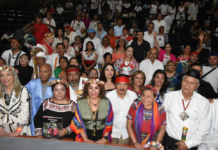
Violent incidents continue to accumulate in Morelos without pause. Just last Saturday, during the 12th Walk for Peace held in Cuernavaca, voices such as Bishop Ramón Castro Castro denounced that residents in some communities are victims of extortion simply to remain in their homes.
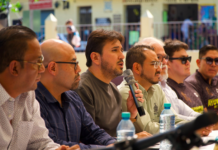
Days later, security forces arrested Agustín “N,” mayor of Atlatlahucan, as well as Irving “N,” former mayor of Yecapixtla, both accused of extortion. The arrests once again raised concerns about alleged links between local authorities and criminal organizations operating in the state.
This situation has been accompanied by accusations against Governor Margarita González Saravia related to an alleged investigation by United States authorities and supposed immigration restrictions, claims that have increased political tension in the state.

Morelos is currently going through a period marked by deep deterioration in public security. Violence is no longer perceived as a series of isolated incidents but rather as part of the daily life of thousands of residents, amid a growing sense of vulnerability and uncertainty.
The increase in crimes such as extortion also reflects weakening governance conditions in different regions of the state. Business owners, transport workers, and families face increasing pressure from criminal groups, while public complaints about threats and illegal fees continue to multiply.
According to the Security Monitor of Confederación Patronal de la República Mexicana, during the first quarter of the year Morelos ranked as the Mexican state with the highest extortion rate in the country, registering 7.6 cases per 100,000 inhabitants, reinforcing the perception of a state trapped in a spiral of criminality.
Residents allegedly pay to live in their communities
The Bishop of Cuernavaca stated during the recent protest in the state capital that violence and organized crime have disrupted community life in several regions of Morelos, which have repeatedly become scenes of extortion, disappearances, and homicides.
During the demonstration, citizens demanded peace and security while the bishop revealed that in some communities, such as Huautla in the municipality of Tlaquiltenango, residents are allegedly forced to pay criminal organizations in order to continue living in their own homes.
“Organized crime has reached a level of cruelty that is beyond description; they charge fees simply for living there, simply for owning a house. They are not charging for a business or merchandise — they charge people for living, for existing on land that belongs to them and that criminals want to take through fear and threats,” Castro stated.
The bishop warned that these and other situations of extreme violence have caused family displacement, restrictions on daily activities, and a progressive deterioration of the social fabric in multiple communities.
Castro also denounced that violence has affected the religious sector itself, stating that some priests were forced to leave communities after receiving threats allegedly linked to organized crime, resulting in the suspension of religious activities in certain areas.
“Lying about reality is also a form of violence,” the bishop said while criticizing the official narrative of Morelos authorities regarding insecurity. According to him, nine out of ten residents in the state live in fear because of generalized violence.
Political violence and rising homicides
The religious leader also stated that Morelos has become one of the states most affected by insecurity, with high rates of femicide, political violence, and intentional homicide.
These statements are supported by official figures. According to Mexico’s federal Security Cabinet, Morelos accounts for 6.4 percent of all intentional homicide cases nationwide, despite being one of the country’s smallest states.
Data from Morelos Rinde Cuentas indicates that intentional homicides in Morelos continued to rise during the beginning of 2026, consolidating the state as one of the country’s main security concerns.
During the first three months of the year, authorities recorded 282 homicide cases, compared to 256 victims during the same period in 2025. The 10 percent increase reflects ongoing difficulties in containing lethal violence.
Violence against women
Gender violence continues to raise alarms in Morelos. During the first quarter of the year alone, at least 31 femicides were reported, increasing demands for justice and security, especially after the murders of two students from the Universidad Autónoma del Estado de Morelos.
One case involved Kimberly Joselin Ramos, a student from the Faculty of Accounting, Administration, and Informatics, whose body was found on March 2 near the Chamilpa campus after she had been reported missing since February. That same day, Karol Toledo Gómez, a law student from the School of Higher Studies in Mazatepec, disappeared. Her body was found on March 5 in the area of Coatetelco. Both young women were 18 years old.
These crimes triggered demonstrations and statements within the university community, where students and professors demanded stronger protection measures and more forceful actions against violence toward women in the state.
Arrests of mayors and officials
The administration led by Governor Margarita González Saravia has relied heavily on the federal government for public security efforts.
In March, Omar García Harfuch explained that, under instructions from President Claudia Sheinbaum, a new security reinforcement strategy had been launched in Morelos, led by national security institutions.
As part of these operations, García Harfuch confirmed the arrests of the mayor of Atlatlahucan and the former mayor of Yecapixtla within the framework of “Operation Enjambre” in Morelos.
Authorities reported that several of those arrested allegedly participated in meetings with Júpiter Araujo Benard, known as “El Barbas,” identified as a regional operator of the Cártel del Pacífico in eastern Morelos.
The investigations reportedly began after complaints from business owners, transport workers, and families who were victims of threats, extortion, and pressure from criminal groups in Cuautla and nearby municipalities.
Authorities also stated that the Financial Intelligence Unit would freeze the accounts and assets of 32 individuals and companies allegedly linked to this network of corruption and criminal protection in Morelos.
Allegations against the governor
Governor Margarita González Saravia became the target of allegations published by a digital media outlet, which claimed that she was under investigation by United States authorities and possibly subject to immigration restrictions.
González Saravia publicly rejected the claims, calling them “malicious and unfounded” and denying any irregularities regarding her legal or immigration status.
The government of Morelos, through Secretary of Government Edgar Maldonado, also rejected the accusations and stated that the information lacked evidence and credibility.
Maldonado affirmed that the governor’s official documents remain fully valid and that she continues carrying out her institutional and governmental duties normally.
He also called for responsibility and accuracy in the handling of information by media outlets and digital platforms, arguing that such publications contribute to misinformation and political tension.
“It contains political motives aimed at damaging this government and possibly the image of a woman who is respected and who demonstrates consistency in her actions every day,” Maldonado concluded.
Source: reporteindigo