
As part of the social economy and reintegration strategy led by Governor Margarita González, the Morelos state administration is moving forward with the creation of a textile cooperative that will allow 120 women deprived of their liberty to receive training, develop productive skills, and generate income for their families from the Women’s Social Reintegration Center in Cuernavaca, Morelos.
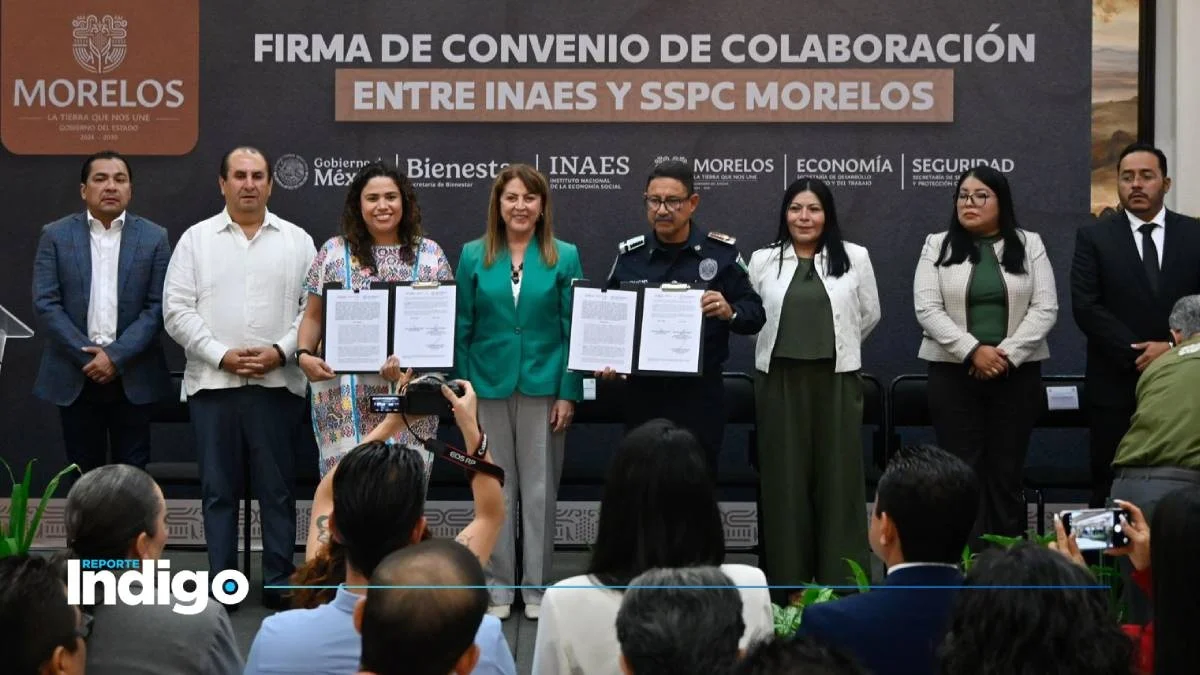
In this regard, the state governor witnessed the signing of a collaboration agreement between the National Institute of Social Economy (INAES) and the Secretariat of Security and Citizen Protection (SSPC) of Morelos, through which the cooperative will be established, the workshop will be equipped, and the products manufactured there will be marketed.
The project includes the production of sheets, gowns, and other linens for IMSS-Bienestar hospitals, which will provide a defined destination for the products and ensure continuity for the participants’ work.
“That gives women deprived of their liberty the possibility of having a secure market, of having a long-term outlook for the work they will carry out, and, effectively, income for their families,” said Governor Margarita González.

Likewise, the head of the Executive Branch recognized the support of the Mexican government, led by President Claudia Sheinbaum, and emphasized that this policy seeks to ensure that reintegration also creates opportunities for economic autonomy and collective organization.
For her part, Catalina Monreal Pérez, director general of INAES, stated that Morelos is a pioneer in applying this social economy model within the penitentiary system and explained that there are also plans to involve relatives of the participants in productive activities outside the center, in order to expand the economic benefits and maintain ties with their surroundings.
“Talking about social reintegration cannot be limited to simply serving a sentence. True reintegration requires training, work, income, family ties, and real opportunities to build a new life project,” she stated.
Monreal Pérez added that the intention is to consolidate the experience in Morelos and, based on its results, evaluate its replication in other social reintegration centers across the country.
For her part, Sara Zavala Arzola, director general of Economy and Entrepreneurship for Well-Being of the Secretariat of Economic Development and Labor (SDEyT), and Josué Israel Molina Díaz, coordinator of the Morelos Penitentiary System, agreed that the model will complement training with tools for self-employment and entrepreneurship that will be useful to the participants once they regain their freedom.
The agreement was signed by Catalina Monreal Pérez and the Secretary of Security and Citizen Protection of Morelos, José Luis Bucio Quiroz, and stems from the general collaboration agreement signed on February 18, 2026, between INAES and the state Executive Branch.
It should be noted that the cooperative joins two other textile projects developed in Jiutepec and Tetecala. Together, the three initiatives represent an estimated annual economic impact of 33 million pesos and provide direct support for more than 200 families.
Source: reporteindigo